From wooden padukas associated with ancient Indian spiritual traditions to handcrafted Kolhapuri chappals and the familiar rubber slippers found in millions of homes, Indian footwear tells a remarkable story of faith, ingenuity, craftsmanship and everyday life.
A pair of chappals may seem like an ordinary possession today. Yet behind this simple design lies a fascinating history spanning religious traditions, regional trade, rural livelihoods, changing technologies and the evolution of Indian fashion. Some sandals became symbols of humility and devotion; others became celebrated examples of traditional craftsmanship.
So how did a simple foot covering travel from the world of ancient ascetics to modern markets, fashion boutiques and international wardrobes? The answer begins with one of India's most recognisable traditional sandals: the paduka.
A little Indian footwear wisdom
In India, footwear has never been only about protecting the feet. It can express regional identity, social customs, religious respect, personal style and even family humour. Few everyday objects carry quite so many meanings!

Sandal design has evolved across generations, balancing practicality, comfort and personal style. Use a verified photograph of traditional Indian footwear here for a more historically specific illustration.
Ancient Origins: The Sacred Paduka
One of the best-known traditional forms of Indian footwear is the paduka, a sandal commonly associated with a wooden sole and a small post or peg that sits between the big toe and the second toe. Historical examples and traditional forms also use other materials, including metal and ivory, depending on period, region and social context.
Unlike modern cushioned footwear, the traditional paduka is remarkably simple. Its design minimises the amount of material needed while providing a raised surface between the foot and the ground. Making such a sandal required an understanding of shape, balance and the practical demands of walking.
Padukas are particularly associated with ascetics, religious teachers and spiritual traditions. Some forms of traditional footwear were connected with ideals of simplicity and non-attachment. In certain religious contexts, choosing a material could also reflect ethical or ritual considerations. It would be misleading, however, to assume that every ancient sandal or every wearer followed the same rules.
The Ramayana connection: When sandals represented a kingdom

One of the most memorable stories involving Indian footwear appears in the Ramayana. In a widely known version of the epic, Prince Rama goes into exile, and his brother Bharata refuses to take his place as the rightful king in spirit.
Bharata brings Rama's padukas back and places them on the throne of Ayodhya. He governs as Rama's representative, treating the sandals as a symbol of Rama's authority until his return.
Consider the symbolism: an object designed to protect the feet becomes a representation of duty, loyalty and legitimate rule. In this story, the padukas are not valuable because of their material or decoration. Their meaning comes from the person they represent.
The deeper meaning
The story of Bharata's padukas reminds us that an ordinary object can carry extraordinary meaning. In Indian cultural traditions, footwear can represent humility, reverence, authority and the presence of someone who is physically absent.
From Simple Sandals to Regional Craftsmanship
As communities developed different materials, tools and craft traditions, footwear took many forms across the Indian subcontinent. Leatherworking, weaving, embroidery, wood carving and decorative metalwork contributed to the variety of shoes and sandals used in different regions.
There was never just one straight line of development from the paduka to the modern chappal. Different styles existed alongside one another, shaped by local climates, available materials, religious practices, trade routes, occupations and changing ideas of fashion.
In some areas, a simple open sandal was practical for hot weather. In others, a more enclosed shoe offered protection against dust or rough terrain. Decorative footwear became important for weddings, festivals, courtly dress and ceremonial occasions.
A country of distinctive footwear traditions
| Region or tradition | Footwear style | Distinctive features |
|---|---|---|
| Maharashtra | Kolhapuri chappal | Recognisable leather sandals, often with T-shaped straps, braided details and hand-finished construction. |
| Rajasthan | Traditional mojari and jutti styles | Decorative footwear associated with regional leatherwork, embroidery and festive dress. |
| Punjab and North India | Punjabi jutti | Traditionally crafted footwear, often embellished with embroidery, coloured thread and decorative motifs. |
| South India | Regional leather and open sandal traditions | Designs influenced by local materials, climate, craft practices and everyday needs. |
| Across India | Rubber and synthetic slippers | Lightweight, inexpensive designs widely used for daily activities, indoor wear and casual outings. |
These categories are not rigid boundaries. Footwear moves with people, and similar designs can appear in neighbouring regions. The name, construction and decoration of a style may also differ from one community or artisan tradition to another.
The Kolhapuri Chappal: A Story of Skill and Identity
Few Indian sandals are as widely recognised as the Kolhapuri chappal. Associated with Kolhapur and other parts of Maharashtra and neighbouring Karnataka, these traditional leather sandals are valued for their distinctive construction and handmade character.

Leather footwear relies on careful cutting, shaping and finishing. Authentic Kolhapuri chappals.
Traditional Kolhapuri sandals are often made from leather and may feature T-shaped straps, braided elements, decorative cut-outs and hand stitching. The exact design varies between makers and product types. Some pairs are understated, while others feature elaborate details that make the craftsmanship immediately visible.
The history of Kolhapuri footwear is associated with longstanding regional leatherworking traditions. Its development cannot be reduced to one inventor or one precise date. In the late nineteenth and early twentieth centuries, the region's craft traditions received attention and patronage, including during the reign of Chhatrapati Shahu Maharaj of Kolhapur.
The artisan's story: More than a pair of sandals
Imagine a small workshop where a craftsperson begins with pieces of leather. The material must be selected, cut and shaped. The straps need to sit properly across the foot, the sole must be formed, and the components must be joined with care.
Even small differences matter. A strap placed incorrectly can affect comfort. Poorly finished edges may irritate the skin. A sole that is too stiff or too flexible for its intended use can change how the sandal feels while walking.
This is why traditional footwear is more than a decorative product. It reflects accumulated knowledge about materials, fit, tools and finishing techniques. That knowledge is often passed between generations through observation and hands-on work.
Did you know?
Kolhapuri chappals are associated with a regional craft tradition spanning parts of Maharashtra and Karnataka. In 2019, Kolhapuri chappals received a Geographical Indication (GI) registration in India, recognising the geographical origin and specified characteristics of the registered product.
Do Kolhapuri chappals really squeak?
Stories about traditional Kolhapuri chappals sometimes mention a characteristic squeaking sound while walking. Such sounds can result from friction between materials and the way a sandal is constructed. Claims that a particular dried seed or seed pod was universally used to create the sound should be treated cautiously unless supported by reliable documentation of that specific technique.
Whether a handmade pair squeaks or not, the important feature is its construction. Authenticity and quality are better assessed by looking at the materials, finishing, fit, workmanship and provenance than by expecting every pair to make the same sound.
Juttis and Mojaris: When Footwear Becomes Art
Traditional Indian footwear is not limited to open chappals. The jutti and mojari, associated with North Indian and Rajasthani traditions among others, demonstrate how footwear can become a form of decorative art.

These styles are often recognised by their enclosed or semi-enclosed construction and ornamental surfaces. Depending on the design, they may feature embroidered flowers, coloured thread, metallic details, beads or intricate patterns.
Such footwear has a strong presence in wedding attire, festive wardrobes and ceremonial dress. A carefully chosen pair can complement embroidered garments without competing with them. Contemporary makers also experiment with bright colours, contemporary silhouettes and lighter materials.
The contrast between a simple wooden paduka and a heavily decorated jutti illustrates the extraordinary variety of Indian footwear traditions: one can express spiritual restraint, while another can celebrate colour, artistry and occasion.
The Rise of the Everyday Rubber Chappal
The familiar rubber slipper transformed everyday footwear by making a lightweight, washable and relatively inexpensive option widely accessible. Industrial manufacturing, rubber processing and later the use of synthetic materials helped popularise mass-produced sandals in many countries.

In India, the rubber chappal became particularly well suited to daily life. It is easy to slip on when stepping outside, convenient for many household tasks and simple to clean. Its open construction also suits warm weather.
Why are Hawai chappals so popular?
- Affordability: Mass production makes many basic pairs accessible to a wide range of buyers.
- Convenience: Their slip-on design makes them practical for quick trips and everyday routines.
- Easy maintenance: Many rubber and synthetic models can be cleaned with water and mild soap.
- Lightweight construction: Simple designs are easy to carry and store.
- Wide availability: From neighbourhood shops to online marketplaces, everyday slippers are sold in many sizes, colours and price ranges.
The name "Hawai chappal" is widely used in India for simple rubber or synthetic thong sandals. It should not be taken to mean that every such sandal has the same manufacturer or a single documented origin. The wider history of rubber thong sandals is international, and their precise evolution involves several influences.
A familiar Indian scene
A visitor arrives at a home, leaves their chappals at the entrance and steps inside. Outside, the sandals sit in a colourful row, each pair telling a small story about its owner. This ordinary scene reflects a widespread custom of removing outdoor footwear in many Indian homes and places of worship.
Chappals and Indian Culture: Customs and Everyday Life
Footwear occupies an interesting place in Indian social life. In many households, people remove their shoes or chappals before entering living spaces, temples and other places where the custom is observed. Practices vary, but removing outdoor footwear can express cleanliness, respect and the distinction between outside and inside.
Footwear can also carry emotional and symbolic meaning. The padukas in the Ramayana story of Bharata and Rama are one famous example. In other contexts, footwear may appear in folk sayings, jokes, family conversations and popular entertainment.
And then there is the familiar household joke about the chappal being an all-purpose tool. Its reputation in family humour is so recognisable that it has become a recurring comic reference in Indian popular culture. The joke works because the object is so ordinary and familiar.
Of course, humour should not obscure the practical purpose of footwear or normalise violence. The real story of the chappal is much more interesting: it is a small object that connects domestic life, regional identity, craftsmanship and cultural memory.
Traditional Chappals in Modern Fashion
Today, traditional Indian footwear appears in both everyday wardrobes and high-fashion collections. Kolhapuri chappals are worn with jeans, cotton trousers, kurtas and contemporary fusion outfits. Embroidered juttis and mojaris remain popular choices for weddings, festivals and celebratory occasions.

Modern makers often experiment with softer footbeds, contemporary colours, new strap arrangements and updated sole materials. These changes can make traditional styles more versatile, although a modern adaptation may differ significantly from a handmade traditional example.
The renewed interest in craft-based products also creates opportunities for artisans. Buyers who seek well-made traditional footwear can help support skilled work by purchasing from reputable makers and asking questions about where and how a product is made.

How to Choose a Good Pair of Chappals
Whether you are buying traditional leather sandals or inexpensive everyday slippers, a good pair should suit your feet, your activities and the surfaces on which you plan to walk.
- Check the fit: Your toes and heel should sit comfortably on the footbed without excessive overhang.
- Inspect the straps: They should hold the foot securely without digging into the skin.
- Examine the sole: Look for suitable grip, stable construction and a finish appropriate to your use.
- Consider the material: Leather, rubber and synthetic materials have different maintenance and comfort characteristics.
- Choose for the occasion: A traditional leather sandal may suit casual outings, while a washable rubber slipper may be more practical for wet or messy tasks.
- Look for quality rather than appearance alone: Good stitching, smooth edges and well-finished straps can make a difference to durability and comfort.
People with persistent foot pain, diabetes-related foot problems or other conditions affecting foot health may need footwear recommended by a qualified healthcare professional. Fashion and traditional design should never take priority over an individual's medical needs.
Sustainability: Can Traditional Footwear Teach Us Something?
The history of handmade footwear offers an opportunity to think about the life cycle of the things we buy. A well-made product that can be maintained or repaired may remain useful longer than a cheaply made item that quickly wears out.
Traditional leather footwear can be durable, but leather production also has environmental and animal-welfare considerations. Rubber and synthetic sandals have their own challenges, including material sourcing, manufacturing impacts and end-of-life waste.
There is no single material that is automatically the most sustainable in every situation. Durability, repairability, responsible sourcing, manufacturing practices and the way a product is disposed of all matter.
As consumers, we can make more considered choices by buying footwear that fits well, taking care of it, repairing it where practical and avoiding unnecessary replacement. Supporting responsible craft businesses can also help preserve valuable traditional skills.
A Brief Timeline of Indian Footwear
Note: This is a broad cultural timeline, not a precise chronology of the invention of individual footwear styles. The origins and dates of many regional designs remain complex and are not always documented consistently.
Popular Chappal and Sandal Brands to Explore
If you are looking for everyday footwear or a traditional leather sandal, these brands and product categories can serve as starting points. Compare the current product specifications, materials, sizing, return policies and seller reputation before purchasing.

Bata Leather Chappals
Explore traditional and everyday footwear options. Check the specific listing for the actual upper and sole materials.
 |
 |
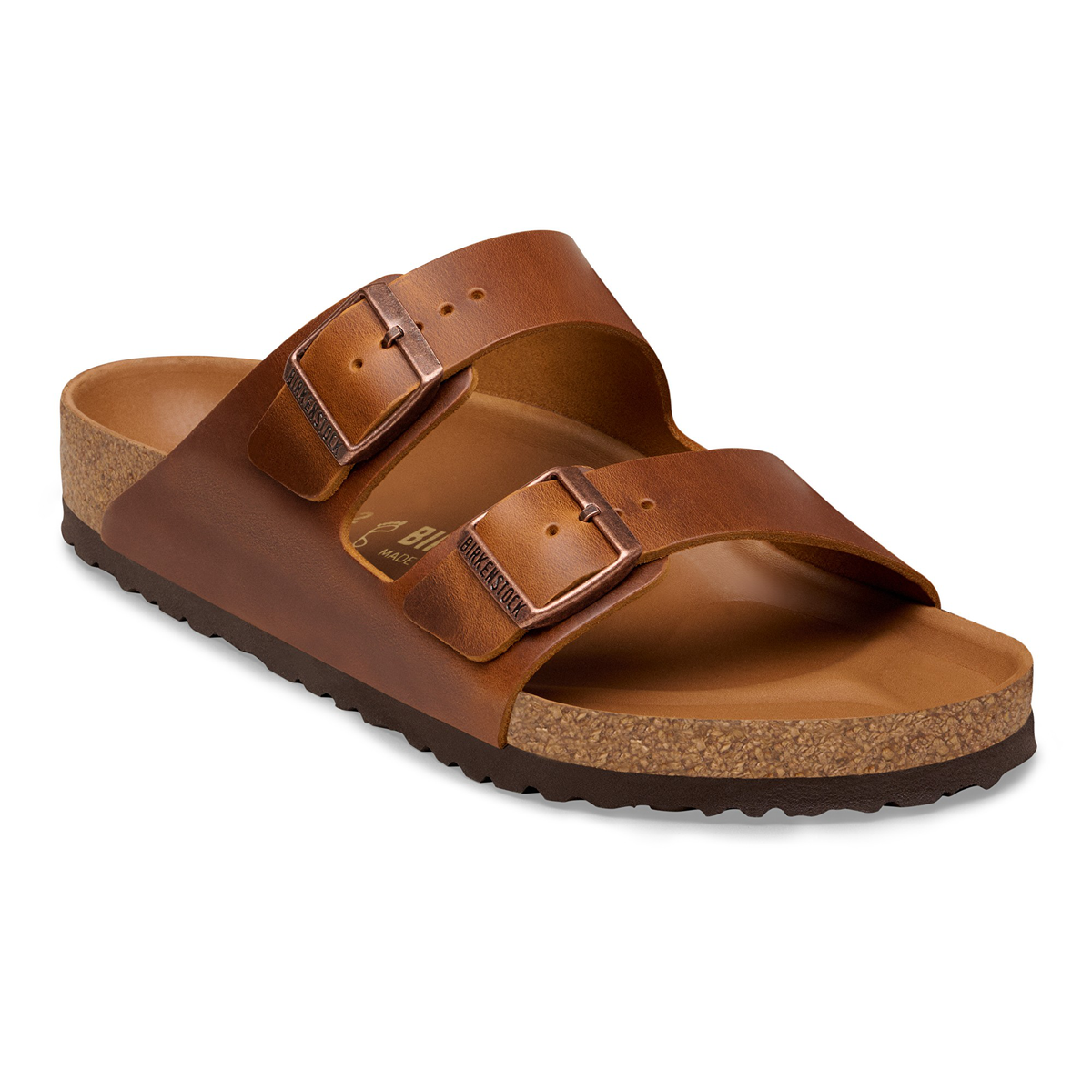
Birkenstock Arizona
A two-strap sandal design known for its contoured footbed. Check the particular model's materials and sizing.

Red Tape Slides
Consider modern casual slides for everyday use. Cushioning, construction and durability vary by model.

Look for clear information about the maker, leather or alternative materials, construction and regional origin.
Product images and availability may change. These links lead to search results, not endorsements of a particular listing. Verify product details, authenticity and current prices directly with the seller.
A Small Object with a Remarkable History
The Indian chappal is much more than a simple covering for the feet. Its story connects ancient religious traditions, regional craftsmanship, changing lifestyles, industrial innovation and modern fashion.
The padukas of cultural and religious memory remind us of devotion and duty. Kolhapuri chappals showcase the skill of leatherworkers and the importance of regional craft traditions. Juttis and mojaris demonstrate how footwear can become an expression of celebration and artistic identity. Meanwhile, the everyday rubber chappal remains a practical companion for millions of people.
Each style represents a different answer to a simple human need: how to protect our feet while living, working, travelling and celebrating. Across centuries, the materials and designs have changed, but the relationship between footwear and daily life remains.
The next time you slip on a pair of chappals, remember that you are wearing more than a practical accessory. You are participating in a long and varied history of design, ingenuity and cultural tradition.
A final thought
From the simplicity of the paduka to the artistry of a handmade Kolhapuri, Indian footwear reminds us that even the most ordinary objects can carry extraordinary stories.
Editorial note: Historical accounts of footwear vary across regions and sources. For academic publication, add citations from reliable museum collections, historical scholarship and official Geographical Indication records for specific dates and claims.